Contact us at: 0717200227

How AI is Revolutionizing Learning for the Modern Student

Remember staring at a dense textbook, wishing it could magically adapt to your pace? Or feeling lost in a lecture, desperate for personalized help? The educational landscape, once largely static, is undergoing a seismic transformation, driven by the powerful engine of Artificial Intelligence. AI isn’t here to replace the invaluable human connection at the heart of learning; instead, it’s emerging as an indispensable partner, supercharging the process for students and educators alike. By harnessing intelligent tools, offering unprecedented personalized support, and unlocking remarkable efficiencies, AI is paving the way for a future where learning is deeply personalized, profoundly supportive, and incredibly effective. Welcome to the era of AI-powered education.
1. Smart Tools: The Rise of the Adaptive Learning Ecosystem
AI has birthed a new generation of smart learning tools that dynamically respond to individual needs, creating truly personalized learning pathways:
- Adaptive Learning Platforms (The Intelligent Compass): Tools like Khan Academy, DreamBox, ALEKS, and Duolingo employ sophisticated algorithms to assess a student’s mastery in real-time. Struggling with quadratic equations? The platform instantly provides foundational review and targeted practice. Acing geometry proofs? It seamlessly advances to more complex theorems or related applications. This constant calibration ensures students are perpetually challenged at their “zone of proximal development,” maximizing engagement and minimizing frustration or boredom. Imagine a textbook that constantly reshapes itself to fit your exact understanding.
- Intelligent Tutoring Systems (ITS) (The 24/7 Personal Tutor): These AI-powered tutors simulate the nuanced guidance of a human expert. They don’t just deliver content; they diagnose specific misconceptions through interactive dialogue and problem-solving sequences. Need help debugging Python code or balancing a chemical equation? An ITS can walk you through step-by-step, offering hints, explanations, and immediate feedback tailored to your error. It’s a patient, tireless tutor available anytime, anywhere, without judgment.
- Generative AI & Content Creation (The Creative Catalyst): Platforms leveraging generative AI (like ChatGPT, Claude, or specialized educational tools) can create bespoke learning materials. Need practice problems on a specific calculus concept? Request them. Require a concise summary of the French Revolution tailored to your reading level? Generate it. Seeking creative writing prompts based on your favorite sci-fi genre? AI delivers. This fosters engagement by aligning content directly with individual interests and learning goals.
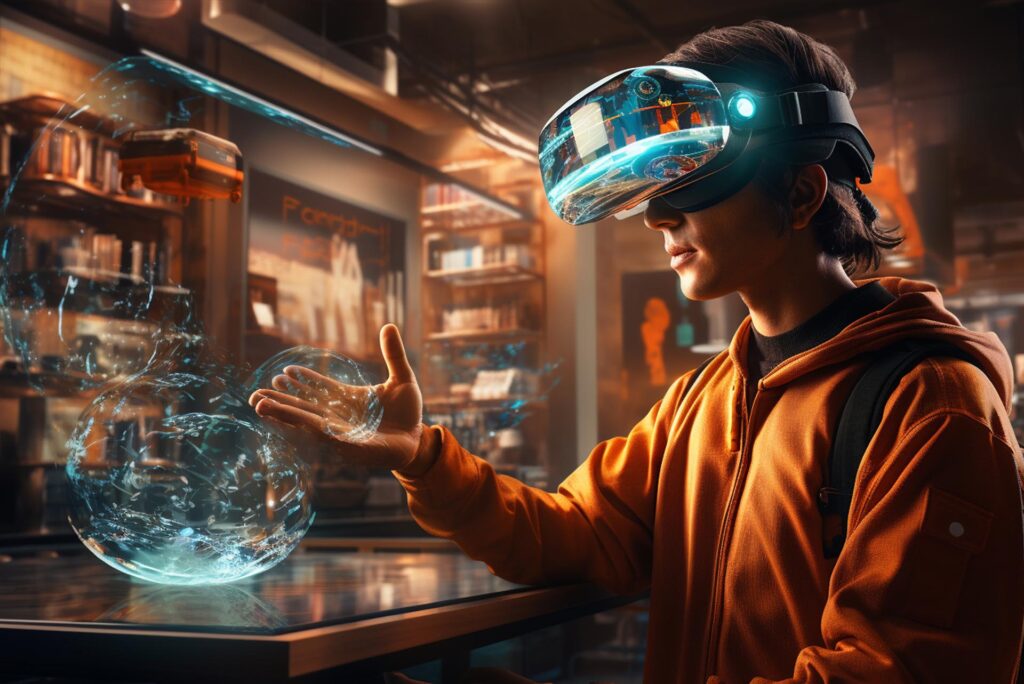
- Immersive Technologies (The Experience Engine): AI enhances Virtual and Augmented Reality (VR/AR), creating powerful simulated learning environments. Medical students can practice intricate surgeries, history students can explore ancient civilizations, and engineering students can interact with complex 3D models – all in risk-free, highly engaging virtual spaces guided by intelligent feedback systems.
2. Empowering Every Student: Personalized Support Beyond Measure
AI acts as a powerful, tireless ally for students, addressing diverse needs and learning styles in ways previously unimaginable:
- Championing Accessibility & Inclusion: AI is a formidable force for breaking down barriers. Text-to-speech and advanced speech-to-text tools empower students with dyslexia or visual impairments. Real-time translation tools and AI-powered language tutors help non-native speakers access and master content. Sophisticated captioning ensures deaf or hard-of-hearing students fully participate. AI can even adapt interfaces for neurodiverse learners, fostering a truly equitable learning environment.
- Proactive Intervention & Targeted Support: AI analytics move beyond simple grades. By analyzing patterns in performance data, engagement metrics (like time on task, forum participation), and even sentiment analysis (where appropriate), AI can flag students at risk of falling behind long before traditional methods. This allows teachers, counselors, and support systems to intervene proactively with precisely targeted help – whether it’s extra tutoring, mental health resources, or adjustments to learning plans – preventing small setbacks from becoming major obstacles.
- Building Confidence & Metacognition: Instant, specific feedback on quizzes, assignments, and practice problems is transformative. Students learn from mistakes immediately, reinforcing correct understanding and building confidence through small wins. AI tools can also help students visualize their progress over time, map their strengths and weaknesses across different topics, and even suggest optimal study strategies. This fosters crucial metacognitive skills – helping students understand how they learn best and take ownership of their learning journey.
- Well-being and Guidance Support: While not a replacement for human empathy, AI-powered chatbots and virtual assistants can provide initial, accessible support. They can offer resources for managing stress and anxiety, answer routine administrative questions 24/7 (freeing up human staff), guide students to relevant academic support services, or even provide grounding exercises, contributing significantly to overall student well-being and reducing administrative friction.
3. Efficient Learning: Streamlining the Path to Mastery
One of AI’s most profound impacts is its ability to automate routine tasks and optimize processes, freeing up invaluable time and cognitive resources for deeper, more meaningful learning:
- Liberating Educators from Administrative Burdens: AI automates time-consuming tasks that drain teacher energy. Grading multiple-choice, fill-in-the-blank, and increasingly complex written responses (for grammar, structure, factual accuracy) can be handled efficiently by AI. Scheduling, attendance tracking, generating routine progress reports, and managing basic parent communications can also be streamlined. This reclaims hours per week for teachers, allowing them to focus on high-impact activities like personalized instruction, creative lesson planning, and fostering critical thinking through rich discussions.
- Optimizing Study Time & Resources: AI helps students study smarter, not just harder. Intelligent platforms can generate personalized study schedules based on upcoming exams, course workload, and individual learning patterns. They can curate the most relevant resources (articles, videos, practice sets) for specific learning objectives, eliminating hours of unfocused searching. Spaced repetition algorithms, powered by AI, ensure students review material at optimal intervals for maximum long-term retention.
- Data-Driven Insights for Continuous Improvement: AI excels at analyzing vast datasets. At the classroom level, it can identify common misconceptions across the class, highlight which teaching strategies are most effective for different topics, and suggest adjustments to pacing. At the institutional level, AI analytics can reveal curriculum gaps, evaluate resource effectiveness, predict enrollment trends, and inform strategic decisions, leading to continuous refinement of the entire educational ecosystem.
- Facilitating Collaboration & Feedback: AI tools can enhance group work by suggesting optimal team compositions based on skills, facilitating peer review processes with guided rubrics, and even summarizing discussion threads in online forums. This streamlines collaboration and ensures feedback loops are more efficient and effective.
Conclusion: Embracing the Intelligent Future of Education
The integration of AI in learning is not a distant possibility; it’s an accelerating reality delivering tangible benefits. It personalizes education with unprecedented granularity, provides robust, individualized support that empowers every student, and dramatically increases efficiency for both learners and educators. By automating the mundane, AI frees up the most valuable resource – human time and attention – for the deep, creative, and relational aspects of learning that truly ignite understanding and passion.
Actionable Insights for Students, Educators, and Institutions:
- Start Strategically & Critically Evaluate: Don’t adopt AI blindly. Identify specific pain points (e.g., struggling with algebra, spending too long grading essays, needing accessibility tools). Research and pilot AI tools designed to address those specific needs. Crucially, teach and practice critical evaluation of AI outputs. Understand potential biases, verify information, and use AI as a tool for brainstorming and support, not an unquestionable authority.
- Focus on the Human-AI Partnership (The Augmentation Imperative): The most powerful model is “human in the loop.” Leverage AI to handle repetitive tasks and data crunching, freeing educators to do what they do best: inspire, mentor, facilitate deep discussion, and provide nuanced emotional and intellectual support. For students, use AI tutors for practice and clarification, but engage deeply with teachers and peers for complex analysis and creativity.
- Prioritize Data Privacy & Ethical Development: Demand transparency from AI providers about data usage and security. Advocate for strong ethical guidelines in educational AI development and deployment, ensuring fairness, accountability, and respect for student privacy. Choose tools from vendors committed to responsible AI principles.
- Invest in Training & Digital Literacy: Success requires skill development. Institutions must provide robust professional development for educators on effectively integrating AI tools into pedagogy. Students need guidance on how to learn with AI – using it ethically, effectively, and as a complement to critical thinking and human interaction. Digital literacy encompassing AI understanding is now essential.
- Design for Equity: Actively ensure AI tools bridge, rather than widen, the digital divide. Provide necessary devices and connectivity. Choose tools proven to be effective and unbiased across diverse student populations. Use AI proactively to identify and support underserved students.
AI is transforming learning from a standardized, often passive experience into a dynamic, responsive, and deeply human-centered journey. By embracing smart tools, leveraging AI for powerful student support, and harnessing its potential for efficient learning, we can unlock the full potential of every student and build a future of education that is more engaging, equitable, and effective than ever before.